New NCCN Survey Highlights Persistent Cancer Medication Shortages Across United States
PR Newswire
PLYMOUTH MEETING, Pa., Sept. 10, 2026
NCCN began measuring drug shortfalls more than 3 years ago; today 96% of leading academic centers surveyed say the problem persists.
94% of centers surveyed noted a current shortage of ifosfamide, in addition to a return of carboplatin shortages in 71%.
PLYMOUTH MEETING, Pa., Sept. 10, 2026 /PRNewswire/ -- Today, the National Comprehensive Cancer Network® (NCCN®)—an alliance of leading cancer centers—published updated data on the current impact of generic cancer medication shortages in the United States. The data comes from survey responses from pharmacy directors and other clinical and administrative leadership at NCCN Member Institutions from late August. According to the results, 100% of responding cancer centers are experiencing a shortage for at least one anti-cancer agent; with more than 20% of centers currently in shortage for five or more different medications.
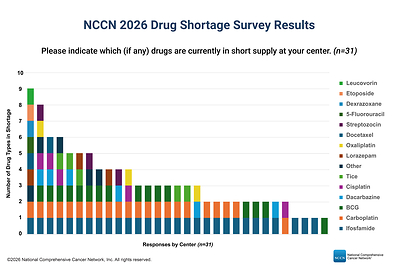
Of the responding centers, 94% noted a shortage of ifosfamide, a generic chemotherapy that is used in treatment for a variety of cancers, including bladder, ovarian, testicular, uterine, soft tissue sarcoma, osteosarcoma, and several adult and pediatric leukemias and lymphomas.
In addition, 71% of centers noted a shortage of carboplatin and 16% for cisplatin, which are key chemotherapies used as the backbone of regimens to treat numerous different tumor types. The immunotherapy Bacillus Calmette-Guérin (BCG) for bladder cancer was also in short supply for more than half of the respondents.
NCCN first started surveying Member Institutions about drug shortage issues during concerns about a lack of carboplatin and cisplatin in June 2023. Results from the latest survey and previous surveys, are available at NCCN.org/drug-shortages.
When asked if national or state policies have made the issue of drug shortages better or worse since 2023, 4% of pharmacy directors surveyed said it has gotten better, while 96% felt it stayed the same.
"It is disheartening that we remain in the same situation, including recurring or continued shortages of some drugs, despite years of raising the alarm and providing insight about this disruptive and dangerous issue for cancer care in America," said Crystal S. Denlinger, MD, Chief Executive Officer, NCCN. "The good news is the cancer centers in our network have developed internal strategies, task forces, and communications plans for keeping patient care and clinical trials on track. The bad news is that this takes time and attention that could be better spent on improving patient experiences and outcomes and adds additional stress to an already burdened system."
When asked how they are handling these shortages, 61% of responding centers noted they required pharmacy and physician-led mitigation strategies in order to keep all of their patients on a recommended dose and schedule, with the majority implementing waste management strategies, while others explored alternative recommended regimens to deliver guideline-recommended care. When treatment plans had to be modified, 90% of centers noted a need for repeat prior authorization of the plan, significantly increasing the amount of work per patient and adding in the potential for a delay in care continuity.
"Nearly every pharmacy director who responded to our survey would like to see economic incentives put in place to encourage high-quality manufacturing for generic cancer medications," noted Alyssa Schatz, DrPh, MSW, Vice President of Policy & Advocacy, NCCN. "That is something that advocates have been requesting for years. As one respondent noted: 'many oncology generics are clinically indispensable but economically unattractive. Without correcting that economic imbalance, shortages are likely to recur.' The survey results also illuminated a desire for better information around generics suppliers and requests for earlier notifications by manufacturers to FDA."
NCCN is part of the End Cancer Drug Shortages Coalition which brings together more than a dozen hematology/oncology nonprofits to address this issue and suggest long-term solutions. The group put out a consensus statement in May 2026 with a big picture look at the ongoing problem and a list of policy proposals for the future. Visit NCCN.org/drug-shortages to learn more.
About the National Comprehensive Cancer Network
The National Comprehensive Cancer Network® (NCCN®) is a not-for-profit alliance of leading cancer centers devoted to patient care, research, and education. NCCN is dedicated to defining and advancing quality, effective, equitable, and accessible cancer care and prevention so all people can live better lives. The NCCN Clinical Practice Guidelines in Oncology (NCCN Guidelines®) provide transparent, evidence-based, expert consensus-driven recommendations for cancer treatment, prevention, and supportive services; they are the recognized standard for clinical direction and policy in cancer management and the most thorough and frequently-updated clinical practice guidelines available in any area of medicine. The NCCN Guidelines for Patients® provide expert cancer treatment information to inform and empower patients and caregivers, through support from the National Comprehensive Cancer Network Foundation (NCCNF). NCCN also advances continuing education, global initiatives, policy, and research collaboration and publication in oncology. Visit NCCN.org for more information.
Media Contact:
Rachel Darwin
267-622-6624
darwin@nccn.org
 View original content to download multimedia:https://www.prnewswire.com/news-releases/new-nccn-survey-highlights-persistent-cancer-medication-shortages-across-united-states-302875325.html
SOURCE National Comprehensive Cancer Network

