MIAMI, FL - Workplace sexual harassment in Florida is not limited to conduct that occurs inside the office, and employees may still be protected when the misconduct happens at company events, during business travel, at client sites, or through after-hours digital messages. Miami employment attorney Jason D. Berkowitz of BT Law Group, PLLC (https://btattorneys.com/sexual-harassment-outside-of-work/) explains how Title VII of the Civil Rights Act and the Florida Civil Rights Act may apply when off-site harassment affects the work environment or leads to a job-related consequence.
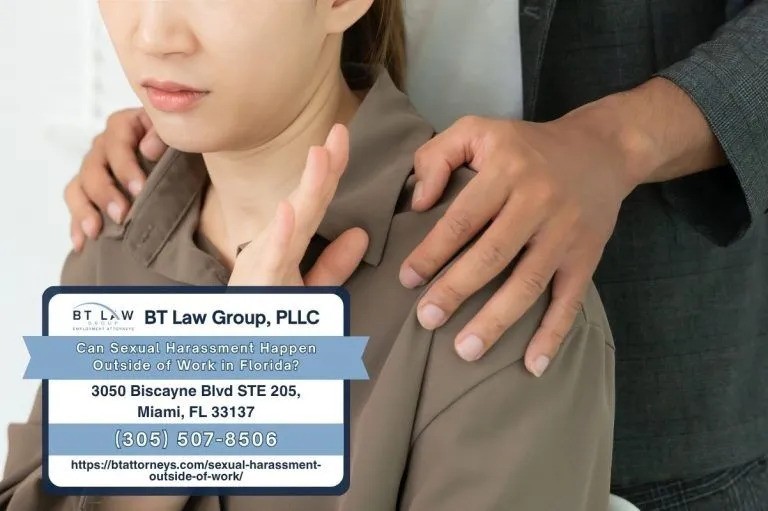
According to Miami employment attorney Jason D. Berkowitz, federal and state law prohibit harassment that is connected to the employment relationship, even when the conduct occurs outside the traditional workplace. Title VII generally applies to employers with 15 or more employees, and the Florida Civil Rights Act provides comparable protection under state law. "Off-site misconduct can still create a hostile work environment when there is a clear connection to the job," Berkowitz explains. "Conduct at a business dinner, during a conference, or through after-hours messages may all support a claim if it is severe or pervasive enough to affect the conditions of employment."
Miami employment attorney Jason D. Berkowitz notes that Florida law recognizes two primary categories of unlawful harassment. Quid pro quo harassment occurs when a supervisor ties a job benefit or consequence to an employee's submission to unwelcome sexual conduct. Hostile work environment claims involve unwelcome conduct that is severe or pervasive enough to create an intimidating, abusive, or offensive workplace. Courts evaluate hostile work environment claims based on the totality of the circumstances, including the frequency and severity of the conduct.
Attorney Berkowitz adds that employer liability depends on who engaged in the harassment. When a supervisor's conduct results in a tangible employment action such as termination or demotion, the employer faces strict liability. When no tangible action follows, the employer may raise the Faragher-Ellerth affirmative defense established by the U.S. Supreme Court in Faragher v. City of Boca Raton and Burlington Industries v. Ellerth. For coworker or non-employee harassment, the employer is liable under a negligence standard when it knew or should have known about the conduct and failed to take prompt corrective action.
The firm also represents employees subjected to harassment by clients, vendors, or other third parties connected to the workplace. Anisley Tarragona, co-founding partner of BT Law Group, points out that third-party harassment is often overlooked but can carry the same legal weight as misconduct by coworkers. "When an employer has notice that a client or vendor is engaging in harassing conduct and fails to act, the employer may be liable for the resulting hostile work environment," Tarragona observes.
Berkowitz emphasizes that Title VII and the Florida Civil Rights Act also prohibit retaliation against employees who report harassment or participate in an investigation. Retaliation may include termination, demotion, pay reductions, or less obvious actions such as reassignment to less desirable positions, increased scrutiny, or exclusion from meetings. Employees who experience retaliation may have an independent legal claim under federal and Florida statutes.
Filing deadlines are strict. Charges with the EEOC generally must be filed within 300 days of the last act of harassment, while complaints with the Florida Commission on Human Relations must be filed within 365 days. Missing these deadlines may prevent an employee from pursuing legal action. The firm represents employees throughout Miami and surrounding Florida communities from its office at 3050 Biscayne Blvd, Suite 205.
For Florida employees who have experienced harassment connected to their employment, contacting an experienced employment attorney may help protect legal rights and preserve potential claims. Prompt documentation and preservation of evidence can be critical when off-site conduct is involved.
About BT Law Group, PLLC:
BT Law Group, PLLC is a Miami-based labor and employment law firm dedicated to representing employees in workplace disputes. Led by founding partners Jason D. Berkowitz and Anisley Tarragona, the firm handles sexual harassment, retaliation, discrimination, wrongful termination, and wage and hour matters under federal and Florida law. The firm serves clients throughout Miami and surrounding Florida communities. For consultations, call (305) 507-8506.
Email: assistant@btattorneys.com
Media Contact

Name
BT Law Group, PLLC
Contact name
Jason D. Berkowitz
Contact phone
(305) 507-8506
Contact address
3050 Biscayne Blvd STE 205
City
Miami
State
FL
Zip
33137
Country
US
Url
https://btattorneys.com/
COMTEX_484132533/2888/2026-06-18T14:23:49
