George Mason University Partners With Oxford-Based TreQ to Bring the First Open-Architecture Quantum Computing System to Virginia
PR Newswire
FAIRFAX, Va. and OXFORDSHIRE, United Kingdom, Sept. 3, 2026
FAIRFAX, Va. and OXFORDSHIRE, United Kingdom, Sept. 3, 2026 /PRNewswire/ -- George Mason University and Oxford-based frontier computing company TreQ announced a groundbreaking partnership to bring open-architecture quantum infrastructure to the Commonwealth of Virginia beginning with the first open-architecture quantum computing system in the state and National Capital Region.
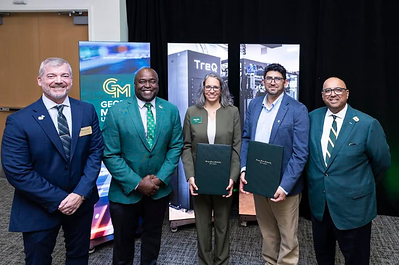
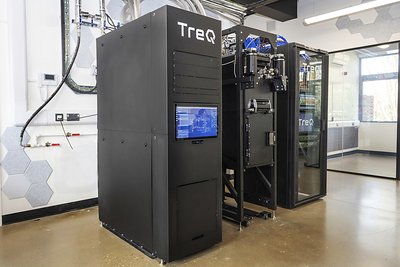
Located on one of George Mason's Northern Virginia campuses, the system will be the first U.S. deployment of a computing system based on TreQ's proprietary Open Architecture Quantum (OAQ) framework. With strategic support from Virginia Innovation Partnership Corporation (VIPC) and TreQ, George Mason is investing in the new $7.7 million system planned for delivery and installation in early 2027, with commissioning expected by late summer 2027.
"The opportunity for the Commonwealth of Virginia is significant. Experts project that quantum will create a multi-trillion-dollar economy within the decade, and the states that build workforce and infrastructure now will lead in the future," said George Mason University President Gregory Washington. "George Mason has spent nearly a decade boldly building the foundation for this moment. Bringing an open-architecture quantum computing system to our university and making it available to our students and faculty, our partners, the region, and state is the kind of collaborative innovation that will advance Virginia's continued successes."
TreQ will design, deploy, and operate the new built-to-evolve quantum computing infrastructure at George Mason University, collaborate on research and curriculum, and connect Virginia and the region with companies and innovators across the global quantum technology ecosystem.
"Open architecture widens the path for innovation, allowing for different quantum processors, software, networking, and other technologies as they mature, rather than a single integration approach," said TreQ CEO and Founder Mandy Birch. "That gives established companies, startups, and researchers a place to build, test, and integrate, and move the field forward faster. This first deployment creates a foundation Virginia can keep building on, and we're glad to be part of George Mason's vision for what comes next."
Quantum computing is expected to reshape fields including public health and medicine, emergency response, logistics, national security, and infrastructure. Quantum computing is predicted to generate up to $2.7 trillion in economic value internationally by 2035, limited only by two barriers: a shortage of trained talent and the high cost of specialized infrastructure. Alongside ambitious research and interdisciplinary quantum curriculum, the investments at George Mason will help expand access and accelerate discovery, building toward a quantum-enabled future that overcomes both those obstacles.
"The open architecture system provides needed infrastructure to work across the full quantum stack, and fuels rapid innovation that no single organization could tackle alone, advancing the region as a magnet for the quantum supply chain," said College of Science Dean Cody Edwards. "Open-architecture isn't about being vendor-neutral. It changes what's possible by opening the system to more technologies and innovators. With the infrastructure and curriculum to train the workforce, George Mason can help drive the advanced computing economy forward."
This partnership builds on George Mason's Quantum Science and Engineering Center (QSEC), where 24 faculty across seven departments and several colleges, have developed the university's foundation in quantum. QSEC also recently signed an MOU with two of Korea's leading quantum organizations, the Future Quantum Convergence Forum and the QCI Quantum-AI Convergence Center (QCI), establishing an international relationship with a key U.S. ally in technology and workforce.
"George Mason engineering is advancing the frontiers of quantum computing through pioneering research, transformative student experiences, and strategic partnerships with innovators such as TreQ," added College of Engineering and Computing Dean Ball. "We are preparing the next generation of engineers to turn quantum breakthroughs into practical solutions that will shape the future of technology and society."
Quantum is a priority area within George Mason's Grand Challenge Initiative — a university-wide effort to focus talent and resources on problems of regional and national consequence — and the university is backing it with a $2.4 million catalyst investment, six new postdoctoral positions, and three new faculty positions. The university also launched Virginia's first interdisciplinary master's degree in quantum science and engineering. With 80-85% of George Mason graduates working in the Commonwealth of Virginia and the region, the university is creating a talent pipeline to meet the region's workforce needs.
A university commercialization and researcher recruitment grant from VIPC is helping to catalyze and attract strategic industry investment and additional philanthropy support for Virginia's quantum ecosystem.
"VIPC's mission is to grow Virginia's innovation ecosystems through public-private partnership. This unique collaboration with George Mason University, TreQ, and other partners will help attract industry investment, accelerate research commercialization, develop next-generation talent, and empower entrepreneurs and startups to advance cutting-edge quantum technology in the commonwealth. VIPC is proud to provide catalytic funding to help unlock these exciting opportunities for Virginia's future," said VIPC President and CEO Joe Benevento.
As a top-ranked university, George Mason is already working with regional and industry partners across the state to formalize a broader quantum coalition that is shaping quantum research and workforce development. The new system will also serve as foundational infrastructure for international companies exploring expansion into Northern Virginia.
"Our partnership with TreQ gives QSEC faculty and students access to true quantum computing hardware for the first time. We can now launch ambitious new research initiatives, build globally unique workforce training programs, and team with our industry colleagues to grow the Virginia quantum ecosystem," said QSEC Director Patrick Vora. "This will truly let Virginia take a quantum leap and drive the future."
About George Mason University
George Mason University is Virginia's largest public research university. Located near Washington, D.C., George Mason enrolls more than 40,000 students from 130 countries and all 50 states. George Mason has grown rapidly over the past half-century and is recognized for its innovation and entrepreneurship, remarkable diversity, and commitment to accessibility. In 2023, the university launched Mason Now: Power the Possible, a one-billion-dollar comprehensive campaign to support student success, research, innovation, community, and stewardship. Learn more at gmu.edu.
About TreQ
TreQ is an Oxford-based frontier computing company delivering quantum-accelerated computing. The company designs, deploys, and operates Open Architecture Quantum (OAQ™) computing infrastructure built to evolve with rapid advances in technology. TreQ's OAQ™ approach allows different quantum processors and supporting technologies to be incorporated over time, giving customers a system designed for long-term adaptability. TreQ has already deployed an open-architecture quantum system in Oxfordshire, United Kingdom. Learn more at TreQ.tech
Media Contacts
Will Bohen, Cogent Strategies, 421926@email4pr.com, (202) 558-8644
Paola Duran, George Mason University, 421926@email4pr.com, (703) 993-6403
Megan Chalidis, TreQ, 421926@email4pr.com
 View original content to download multimedia:https://www.prnewswire.com/news-releases/george-mason-university-partners-with-oxford-based-treq-to-bring-the-first-open-architecture-quantum-computing-system-to-virginia-302868932.html
SOURCE TreQ

