First Endometrial Cancer Awareness Week Launches in Canada
Canada NewsWire
MISSISSAUGA, ON, Sept. 14, 2026
- Organizations across the cancer community and GSK unite to increase awareness of endometrial cancer and encourage timely conversations with healthcare providers.
MISSISSAUGA, ON, Sept. 14, 2026 /CNW/ -- During this Gynecological Cancer Awareness Month, GSK Canada is launching the inaugural Endometrial Cancer Awareness Week, an education-focused initiative in collaboration with oncology and patient advocacy organizations. Taking place for the first time from September 14–20, the week establishes a dedicated annual moment to increase understanding of endometrial cancer, including its incidence, impact, possible signs and symptoms, and the importance of timely conversations with healthcare providers when concerns arise.
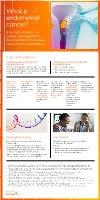
An estimated 8,800 women are expected to be diagnosed with endometrial cancer in Canada in 20261, making it one of the most common gynecologic cancers. While the disease can occur at any age, more than 90 per cent of diagnoses occur in people over 50, and the median age at diagnosis is 63. 2 Yet despite its prevalence, public understanding of endometrial cancer symptoms and risk factors remains low across Canada.
A 2025 national survey commissioned by GSK found substantial gaps in awareness of gynecologic cancers among Canadian women aged 40 and older, including limited understanding of endometrial cancer symptoms and risk factors:
- 86 per cent of respondents do not recall seeing or hearing about a gynecological cancer awareness campaign;
- 82 per cent are unaware of the symptoms of endometrial cancer; and
- 84 per cent are unaware of the disease's risk factors.
The survey also identified barriers that may delay care-seeking:
- 69 per cent said they lack awareness of symptoms;
- 61 per cent reported they may dismiss symptoms; and
- 60 per cent said symptoms could be mistaken for another health condition.
These findings underscore the need for clear, accessible education and inform the objective of Endometrial Cancer Awareness Week: to help people recognize possible symptoms and risk factors, address barriers that may lead symptoms to be dismissed or mistaken for another health condition, and encourage timely conversations with healthcare providers.
Endometrial cancer most commonly affects women after menopause, but it can occur earlier in life. Possible symptoms may include abnormal uterine bleeding, bleeding after menopause, pelvic pain or pressure, and changes in vaginal discharge.3 These symptoms do not always indicate cancer, but they should be discussed with a healthcare provider, particularly if they are unusual or persistent. Greater awareness can help support earlier recognition of possible symptoms and more timely access to appropriate care.
Voices from across the cancer community
People affected by endometrial cancer are supported by broader cancer, gynecologic oncology, survivor and patient advocacy communities in Canada and globally. Together, they are helping bring greater visibility to endometrial cancer, the needs of people affected by the disease and the importance of timely conversations with healthcare providers.
"Canadians affected by endometrial cancer need trusted information, support, and community. Endometrial and ovarian cancers are distinct diseases, but the people facing them can share similar experiences as they navigate symptoms, diagnosis, treatment, and care. This month, we are proud to include Canadians impacted by endometrial cancer in the broader gynecologic cancer conversation so that no one facing these diseases feels alone," said Tania Vrionis, Chief Executive Officer, Ovarian Cancer Canada.
"Endometrial cancer is one of the most common gynecologic cancers in Canada, yet awareness of its signs and symptoms remains far too low. Abnormal vaginal bleeding—particularly bleeding after menopause—should never be ignored. Increasing awareness empowers people to recognize changes in their bodies, seek medical attention sooner, and have informed conversations with their healthcare providers. By working together to bring greater attention to endometrial cancer, we can help support earlier diagnosis and better care for patients across Canada," said Dr. Lesley Roberts, Advocacy Director, The Society of Gynecologic Oncology of Canada.
"For more than two decades, the Quebec Cancer Coalition has worked to ensure the voices of patients, survivors and caregivers are heard in efforts to improve cancer care across Quebec. Awareness is a critical part of that work. By helping more people recognize possible signs and symptoms of endometrial cancer and speak with a healthcare provider sooner, this initiative supports a broader goal we share: improving access to timely information, support and appropriate oncology care," said Eva Villalba, Quebec Cancer Coalition / Coalition priorité cancer au Québec.
"As the incidence of endometrial cancer continues to rise globally, we need to make sure awareness rises with it," said Mary Eiken, CEO, International Gynecologic Cancer Society. "There is no routine screening test, which makes public awareness especially important. Across our global community, IGCS, together with our patient advocacy arm, the International Gynecologic Cancer Advocacy Network, works with advocacy partners worldwide to elevate awareness of uterine cancer and help ensure that advances in prevention, diagnosis and treatment ultimately translate into better outcomes for patients. We are pleased to support Endometrial Cancer Awareness Week in Canada and welcome this opportunity to bring greater attention to a disease that deserves far greater public awareness."
"The survey findings show a clear need for more education around endometrial cancer symptoms and risk factors," said Dr. Michelle Horn, Country Medical Director, GSK Canada. "By launching this education-focused awareness initiative and working alongside organizations across the cancer community, we hope to help make endometrial cancer more visible, support greater disease awareness, and encourage timely conversations with healthcare providers when unusual or persistent symptoms arise."
Canadians are encouraged to use Endometrial Cancer Awareness Week as an opportunity to learn about possible symptoms and risk factors, pay attention to changes that are unusual or persistent, and speak with a healthcare provider if they have concerns. More information and educational resources are available through participating cancer organizations.
About the survey
The national survey, commissioned by GSK Canada, was conducted from April 10 to April 17, 2025, among a nationally representative sample of 1,510 Canadian women aged 40+ who are members of Leger's online panel. A margin of error cannot be calculated for non-probability samples, such as the web panel used in this study. However, for context, a probability sample of 1,510 respondents would yield a margin of error of ±2.5%, with a confidence level of 95% (19 times out of 20).
About endometrial cancer
Endometrial cancer begins in the inner lining of the uterus, known as the endometrium. It is among the most common gynecologic cancers in Canada, with an estimated 8,800 women expected to be diagnosed in 2026, and both incidence and mortality have been increasing.4 Symptoms may include abnormal uterine bleeding, bleeding after menopause, pelvic pain or pressure, and changes in vaginal discharge. These symptoms do not always mean cancer, but they should be discussed with a healthcare provider, particularly if they are unusual or persistent.
About Endometrial Cancer Awareness Week
Endometrial Cancer Awareness Week is a GSK-led, education-focused initiative supported by cancer organizations united to raise awareness and help close gaps in understanding of endometrial cancer. Observed annually during the third week of September as part of Gynecological Cancer Awareness Month, the initiative aims to increase awareness of symptoms and risk factors and encourage timely conversations with healthcare providers.
GSK in gynecologic oncology
GSK is committed to maximizing patient survival through transformational medicines with a current effort on breakthroughs in oncology, including gynecologic cancers, some of the most common cancers affecting women. We are focused on developing new medicines across a range of different modalities for a variety of cancers, including ovarian and endometrial.
About GSK
GSK is a global biopharma company with a purpose to unite science, technology, and talent to get ahead of disease together. Find out more at www.gsk.ca.
Cautionary statement regarding forward-looking statements |
References
- https://cancer.ca/en/cancer-information/cancer-types/uterine/statistics
- https://survivornet.ca/cancer-type/uterine-cancer/#1757339231662-2515da6f-c5de
- https://cancer.ca/en/cancer-information/cancer-types/uterine/signs-and-symptoms
- Brenner DR, et al. Projected estimates of cancer in Canada in 2026. CMAJ. 2026;198:E526-E534.
SOURCE GlaxoSmithKline Inc.

