
Collision Care Xpress is providing consumer guidance explaining the final procedures involved in collision repair before a vehicle is returned to its owner. The November publication addresses vehicle reassembly, component fitment, diagnostic evaluations, manufacturer-required calibrations, and final quality inspections that may be necessary after major repair work is completed.
The guidance focuses on an often-overlooked stage of vehicle restoration. Although repaired body panels and newly refinished surfaces may indicate that significant work has been completed, additional procedures can remain necessary before a vehicle is ready for delivery.
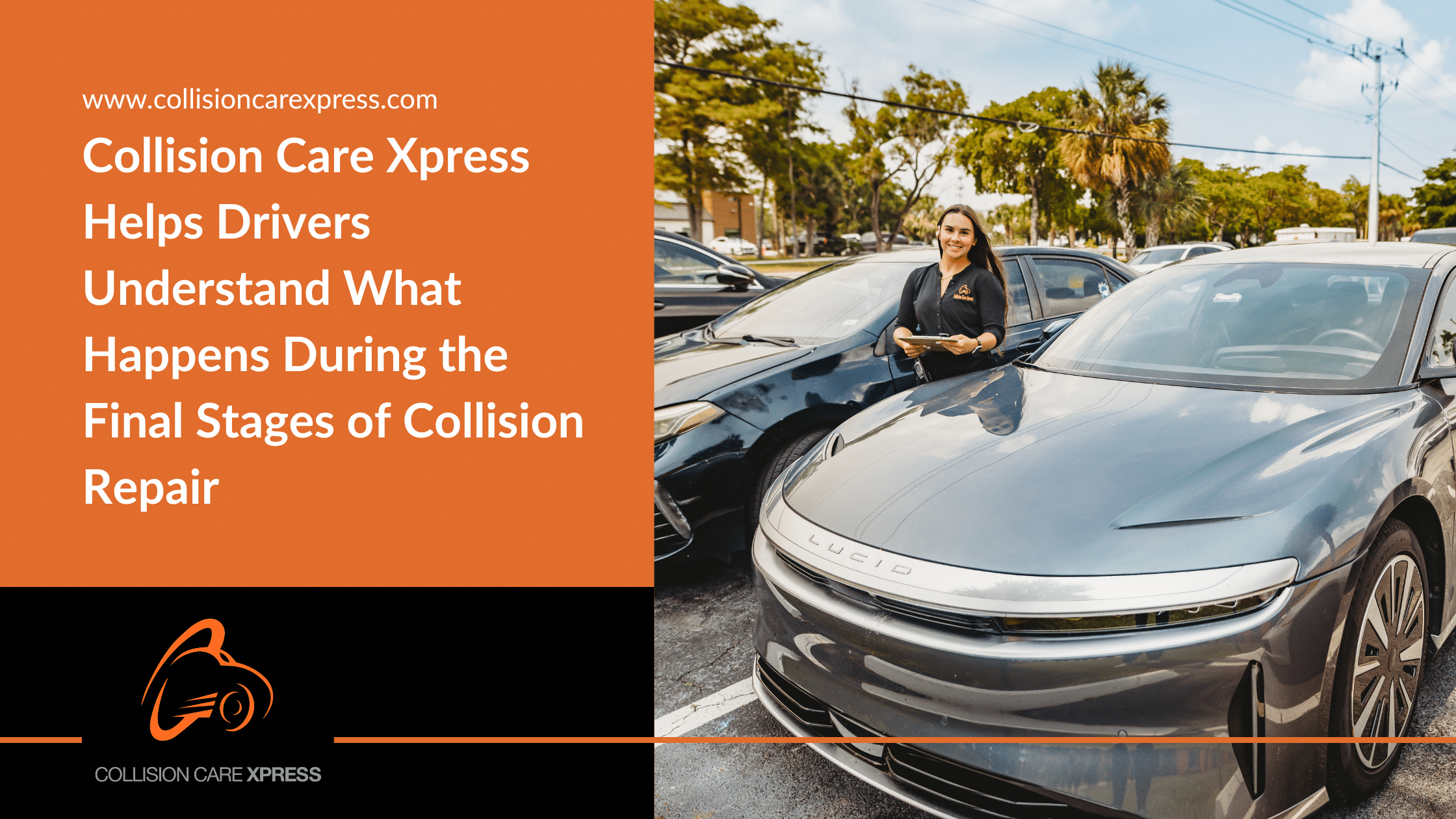
Collision Care Xpress provides collision repair services for drivers in Pompano Beach and surrounding Broward County communities. The company's consumer guidance explains how the final repair stages help technicians review completed work and identify outstanding requirements based on the vehicle's condition and manufacturer specifications.
Vehicle reassembly is one of the activities addressed in the publication. During collision repairs, technicians may remove body panels, lighting assemblies, trim components, and other equipment to access damaged areas. These components must be properly reinstalled once the necessary repairs have been completed.
According to the guidance, reassembly involves more than returning components to their previous positions. Manufacturers may specify installation procedures for fasteners, mounting brackets, seals, wiring connections, and other attachment components. Certain materials or fasteners may also require replacement rather than reuse.
The publication uses bumper assemblies as an example of why reassembly requires attention to surrounding components. A bumper may contain reinforcement structures, mounting hardware, electrical connections, and electronic sensors that must be inspected and installed according to applicable repair procedures.
Through its auto body repair services, Collision Care Xpress addresses damaged exterior panels and related vehicle components. The November guidance explains that final fitment checks may include evaluating panel alignment, gaps, clearances, and the operation of doors, hoods, and trunk lids.
Refinishing inspections are another part of the final repair process. Technicians may review repaired surfaces for color consistency, visible imperfections, and finish quality while confirming that applicable corrosion protection and coating requirements have been addressed.
The guidance emphasizes that exterior appearance alone does not establish whether all necessary repairs are complete. Structural, mechanical, and electronic systems affected by a collision may require separate inspections or verification procedures.
Modern vehicle electronics can introduce additional requirements during the final stages of restoration. Depending on the damage and work performed, manufacturers may specify diagnostic scanning to evaluate electronic control modules and identify certain stored trouble codes.
Collision Care Xpress explains that diagnostic scanning differs from advanced driver assistance system calibration. A scan can provide information about electronic system conditions, while calibration involves manufacturer-defined procedures for applicable cameras, radar sensors, and other driver assistance components.
Through its ADAS repair services, the company addresses repair requirements involving electronic driver assistance technologies. Depending on the vehicle, calibration may involve stationary equipment, driving under specified conditions, or a combination of procedures.
The publication notes that the absence of dashboard warning lights does not necessarily establish that calibration is unnecessary. Applicable manufacturer instructions must be reviewed to determine which operations are required following a particular collision or repair.
Mechanical evaluations may also remain necessary when accident damage affects suspension, steering, or wheel-related components. In these cases, alignment checks, inspections, or additional manufacturer-directed procedures may be appropriate before the vehicle is returned to service.
Final quality control provides an opportunity to examine completed repair operations. Depending on the work performed, technicians may verify lighting functions, panel fitment, repaired surfaces, electronic system conditions, and the completion of applicable diagnostic or calibration requirements.
A road test may also be required for certain vehicles or repair operations. When applicable, the test must follow relevant manufacturer instructions and appropriate safety considerations.
The November guidance addresses the importance of final repair documentation. Invoices, supplemental estimates, diagnostic reports, calibration records, and inspection findings can help vehicle owners understand which operations were completed and why the final repair plan may differ from the initial estimate.
Collision Care Xpress encourages drivers to review the completed work during vehicle pickup and ask about any remaining concerns. Relevant questions include whether manufacturer-required inspections were completed, whether electronic systems required calibration, and what documentation is available for the repairs performed.
The publication emphasizes that final repair requirements vary according to vehicle design, collision severity, and completed repair operations. A minor exterior repair may involve different verification procedures from a collision affecting structural components or electronic safety systems.
For Pompano Beach drivers, the guidance highlights that collision repair does not necessarily end when bodywork and refinishing are complete. Proper reassembly, component verification, applicable diagnostic procedures, and final inspections remain important considerations before vehicle delivery.
Collision Care Xpress serves vehicle owners in Pompano Beach, Florida, and surrounding Broward County communities. The company provides collision repair, auto body repair, and ADAS-related services, with an emphasis on manufacturer repair requirements, damage evaluation, and customer communication throughout the restoration process.
###
For more information about Collision Care Xpress - Pompano Beach, contact the company here:
Collision Care Xpress - Pompano Beach
Robert Molina
954-590-8015
dbservice@collisioncarexpress.com
3041 W McNab Rd, Pompano Beach, FL 33069
