Cold Spring Harbor Laboratory and Northwell Health lead international cohort of researchers to develop more than 150 next-generation cancer treatment models
PR Newswire
COLD SPRING HARBOR, N.Y., Aug. 5, 2026
Human Cancer Model Initiative releases compendium results of decade-long project to create cancer organoids
COLD SPRING HARBOR, N.Y., Aug. 5, 2026 /PRNewswire/ -- Ten years and thousands of patient samples later, the National Cancer Institute (NCI) has just published its results from the Human Cancer Model Initiative (HCMI) on the development of 665 organoid models of 25 types of cancer that are now available to scientists worldwide. Scientists and physicians at Cold Spring Harbor Laboratory and Northwell Health led one of the largest international teams for HCMI and contributed more than 150 of these organoid models to the "Compendium of Next-Generation Patient-Derived Models for Diverse Cancers," which was published in Nature. This consortium developed organoids representing a wide range of malignancies, including pancreatic, breast, endometrial, colorectal, bladder, ovarian, head and neck, and lung cancers.
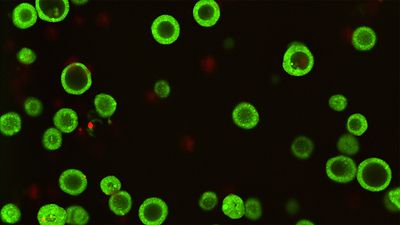
This multinational, collaborative effort established a robust pipeline for creating patient-derived organoid models that represent actual patient tumors and provide state-of-the-art research tools for the international scientific community.
"This effort has created some of the most advanced and valuable patient-derived cancer models available for research today," said David Tuveson, Director of CSHL's NCI-designated Cancer Center. "These organoids more closely reflect the biology of a patient's tumor, providing researchers with powerful tools to accelerate discovery and develop more personalized treatment strategies. Our collaborative partnership with Northwell Health, University of Verona, and Hubrecht University was an incredible team effort among clinicians, physicians, scientists, and patients, and I am proud of the work we did together."
"The patients receiving care at Northwell Health were the starting point for this endeavor," said Richard Barakat, Physician-in-Chief and Executive Director, Cancer Services and Research at Northwell Health. "By working closely with the exceptional teams at Northwell, Cold Spring Harbor and our collaborators worldwide, every breakthrough we achieve in the lab brings us one step closer to transforming the lives of the patients we serve."
More robust research models
Launched in 2017, HCMI began with a goal of generating a thousand three-dimensional cancer organoid culture systems. Organoids are clusters of cells or cellular structures that mimic the organs they're designed to emulate. In this case, they accurately recapitulate actual tumors, allowing researchers to study the biology, as well as therapeutic response, of a patient's specific cancer. In addition to culturing the samples, CSHL served as an instructional site offering courses in organoid development to the scientific community worldwide. The Laboratory also established a robust cancer hotspot sequencing–based quality control process at the CSHL Genome Center for the development of this international biobank.
According to the Nature paper, the "resource provides 522 models with comprehensive clinical data, 153 models of rare cancers, and 71 models from participants with non-European ancestry." Priya Sridevi, CSHL's HCMI lead program manager, added that the benefit of this project lies not just in the variety of cancer models, but in that the repository also includes matched tissue material from original tumors along with complete clinical information linked to each sample. Additionally, advanced molecular profiles, such as DNA and RNA sequences, and transcriptomic and epigenetic data are available, allowing scientists to analyze the organoids for a more comprehensive picture of the disease.
"Traditional cancer cell lines are not very representative of patient tumors, and patient derived xenograft mouse models can be difficult to create and are very expensive," Sridevi explained. "Organoids are more representative, expandable, and cryo-preservable, enabling studies of cancer therapies to occur in a petri dish. This project is also a testament to the strength of the CSHL-Northwell Health Affiliation."
Indeed, these organoids are already being used in cancer research. CSHL Professor David Spector, who assisted in the development of primary breast cancer and metastatic breast cancer organoids, said they allow for faster drug screens.
"The ultimate goal is to use organoids as a means of testing drugs to determine the best combination for a particular tumor and eventually feed that information to the oncologist," Spector said. "This was a massive undertaking. We had to have a strong buy-in from the clinical side and from our research side because of the significance and importance of this work and not just for the local research and clinical community, but for the international research community."
Spector also co-authored a companion paper to the HCMI study. That paper focused on building out the Cancer Dependency Map (DepMap), which aims to identify cancer vulnerabilities in diverse preclinical models. Using the HCMI organoids, researchers were able to expand DepMap to provide a larger resource for studying weaknesses or dependencies in the tumor environment that could potentially be exploited as therapeutic targets.
Toward better patient outcomes
Ultimately, this resource aims to impact patient care. Northwell Health currently provides cancer care to more than 19,000 patients each year, and their participation in the study was key to securing patient samples and providing a pipeline between the research and clinical care teams. Offering patients an opportunity to be a part of scientific research lays the groundwork for future drug discovery, possible clinical trials, and better patient outcomes.
"The success of the Human Cancer Model Initiative depended on seamless coordination between our Cancer Institute clinical teams, the Northwell Health Biospecimen Repository, and CSHL research partners," said James M. Crawford, Professor of Pathology and Laboratory Medicine at Northwell and Professor in the Institute of Health System Science at the Feinstein Institutes for Medical Research. "We are indebted to our patients who made this initiative possible by consenting to the procurement of research biospecimens as part of their clinical care at Northwell. The creation of this resource serves as a foundation for researchers worldwide to better understand human cancer and advance our knowledge of cancer treatment and response."
The HCMI project focused heavily on increasing the diversity of organoids available across cancer cell lines and patient types. While most of the organoid types were derived from adult donors, 43 were created from pediatric or adolescent donors, and 23 percent of successful models developed were of rare cancer types.
"This initiative exemplifies the bridge between clinical care and laboratory research that is needed to advance cancer treatment," said Kevin J. Tracey, President and CEO of the Feinstein Institutes and the Karches Family Distinguished Chair in Medical Research. "Our collaborative teams are accelerating the path from discovery to care. This is how we translate scientific breakthroughs into therapies that will help patients."
A prime example of how this work will benefit the public came from CSHL Assistant Professor Semir Beyaz. "There is a big gap in women's health generally, but an even bigger gap in uterine and gynecological research, and we developed robust and high-fidelity endometrial cancer models, including models from rare but aggressive subtypes and underrepresented groups," Beyaz said. "This is a very good step toward precision medicine, yet because these models are new, we need more research using genetics, epigenetics, and other modalities to reach a better understanding of the disease."
International collaboration
Professor Vincenzo Corbo, whose team at the ARC-Net Centre for Applied Research on Cancer at University of Verona in Italy generated and distributed 70-plus pancreatic and colorectal cancer models, shared that sending the first shipments to NCI marked the realization of the project's core mission. He said, "It validated the extensive behind-the-scenes work, and seeing external researchers actively using the distributed models to make discoveries is the ultimate validation of the project's impact."
The CSHL-led consortium also included leadership and participation from Hubrecht Institute Group Leader Hans Clevers, who is a pioneer in organoid development. Along with Tuveson, Sridevi, Spector, and Beyaz, co-authors from CSHL include Herve Tiriac, Dennis Plenker, Amber N. Habowski, Sonam Bhatia, Hardik Patel, W. Richard McCombie, Sara Goodwin, and Alexander Krasnitz.
About Cold Spring Harbor Laboratory
Founded in 1890, Cold Spring Harbor Laboratory, an independent 501(c)(3) nonprofit, powers transformational discoveries in cancer, neuroscience, artificial intelligence, plant biology, and quantitative biology. For more than a century, Cold Spring Harbor Laboratory has been a powerful and productive environment for developing, connecting and sharing world-changing ideas, from the discovery of jumping genes to the development of lifesaving drugs like Spinraza to teaching tens of thousands of scientists and students each year. Employing 1,000 people, including 600 scientists, students, and technicians, CSHL nurtures the constant flow of ideas through a campus and culture designed to cultivate curiosity, discovery, and innovation, because science makes life better. For more information, visit www.cshl.edu.
About Northwell Health
Northwell is the largest not-for-profit health system in the Northeast, serving residents of New York and Connecticut with 28 hospitals, more than 1,000 outpatient facilities, 22,000 nurses and over 20,000 physicians. Northwell cares for more than three million people annually in the New York metro area, including Long Island, the Hudson Valley, western Connecticut and beyond, thanks to philanthropic support from our communities. Northwell is New York State's largest private employer with over 106,000 employees – including members of Northwell Health Physician Partners and Nuvance Health Medical Practices – who are working to change health care for the better. Northwell, named a TIME100 Most Influential Companies 2025, is making breakthroughs in medicine at the Feinstein Institutes for Medical Research. Northwell is training the next generation of medical professionals at the visionary Donald and Barbara Zucker School of Medicine at Hofstra/Northwell and the Hofstra Northwell School of Nursing and Physician Assistant Studies. For information on our more than 100 medical specialties, visit Northwell.edu and follow us @NorthwellHealth on Facebook, X, Instagram and LinkedIn..

 View original content to download multimedia:https://www.prnewswire.com/news-releases/cold-spring-harbor-laboratory-and-northwell-health-lead-international-cohort-of-researchers-to-develop-more-than-150-next-generation-cancer-treatment-models-302843458.html
SOURCE Cold Spring Harbor Laboratory

