
Choice Collision Centers is publishing consumer guidance explaining why rear-end collision damage should be evaluated before winter driving conditions increase exposure to road salt, moisture, and freezing temperatures. The November publication focuses on four areas that may require attention after a rear-end accident: bumper components, rear body structures, trunk sealing surfaces, and vehicle lighting or electronic systems.
Rear-end collisions can produce damage that extends beyond the visible bumper cover. Even when a vehicle remains drivable and the exterior damage appears limited, the impact may affect underlying components, mounting points, or adjoining body panels.
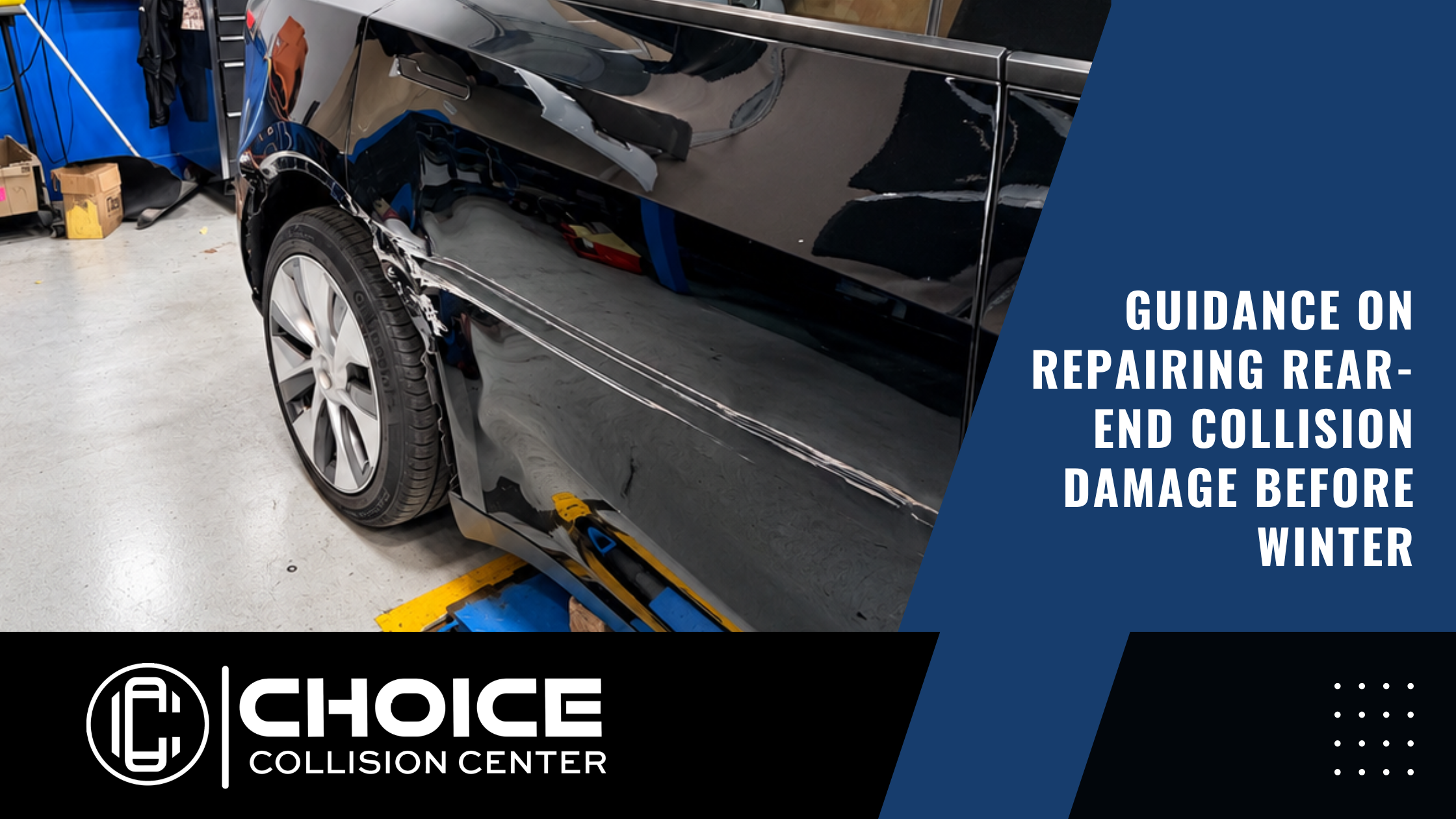
Choice Collision Centers provides full collision repair services for vehicles damaged in accidents. The new guidance explains why identifying the full extent of rear-end damage can be particularly important before winter weather introduces additional exposure to moisture and road contaminants.
The first area involves the rear bumper assembly. Modern bumper systems can include exterior covers, energy-absorbing materials, reinforcement components, brackets, and mounting hardware. Depending on the collision, some components may require closer inspection after the bumper cover is removed.
A bumper cover that returns close to its original shape does not necessarily establish that every underlying component remains undamaged. Technicians may need to inspect concealed areas to determine whether repair or replacement operations are appropriate.
The second area involves rear body panels and adjoining structures. Rear-end impacts can affect the rear body panel, trunk floor, quarter panel connections, and other components near the impact location.
Damage in these areas may require additional evaluation to determine whether structural dimensions, panel attachment points, or surrounding components have been affected. The appropriate repair approach depends on the vehicle's construction and applicable manufacturer procedures.
Through its auto body repair services, Choice Collision Centers evaluates damaged panels and related components as part of developing a vehicle-specific repair plan.
The third area concerns trunk openings, weatherstripping, and sealing surfaces. A rear impact can sometimes alter the position of adjoining panels or affect the areas where weather seals make contact.
These changes may not always produce an obvious problem during dry weather. However, damaged sealing surfaces or misaligned components can create opportunities for water intrusion when a vehicle is exposed to rain, melting snow, or repeated freeze-thaw conditions.
The November guidance explains that moisture entering a trunk or rear cargo area should not automatically be attributed to damaged weatherstripping alone. The surrounding panels, attachment points, and sealing surfaces may also require evaluation to identify the cause.
Winter road salt creates another consideration when rear-end damage has compromised protective coatings. Scraped paint, exposed steel, damaged seams, or disturbed corrosion protection may be exposed to saltwater and road spray.
When repairs involve affected metal surfaces, the repair plan may need to account for restoring applicable protective coatings and corrosion protection according to vehicle-specific requirements.
The fourth area involves rear lighting and electronic equipment. Depending on the vehicle, a rear-end collision may affect taillight assemblies, wiring connections, parking sensors, rear cameras, or other components installed near the impact area.
A lamp or sensor that appears intact from outside may still have damaged mounting hardware or adjoining components. Appropriate inspection and testing can help establish whether the affected equipment requires attention.
Choice Collision Centers provides information about electronic system evaluation through its scans and calibrations services. Diagnostic scanning, functional checks, and calibration are different procedures, and their applicability depends on the vehicle and the repairs performed.
The November publication also addresses repair timing. Rear-end collision damage does not automatically become more severe when temperatures fall, but winter exposure can create additional concerns when metal, protective coatings, or weather seals have already been compromised.
For Fall River drivers, the guidance recommends having visible rear-end damage evaluated before relying on the vehicle throughout the winter season. Warning signs such as uneven trunk gaps, difficulty closing the trunk, water entering the cargo area, damaged lighting, or exposed metal can help identify areas requiring closer inspection.
The publication emphasizes that a complete repair plan should reflect the damage actually identified on the vehicle rather than assuming that every rear-end collision requires the same repairs.
Choice Collision Centers serves Fall River-area drivers at 645 Brayton Avenue, Fall River, MA 02721, providing collision repair, auto body repair, and related vehicle repair services.
###
For more information about Choice Collision Center, contact the company here:
Choice Collision Center (Fall River)
Steve Melo
(401) 245-0213
information@choicecollisioncenters.com
645 Brayton Ave, Fall River, MA 02721
